
A practical, devotional guide to inviting Lakshmi’s grace into your home, your work, and your inner life
The first time I sat down to perform a Lakshmi sadhana, I had no idea what I was doing. I had a small brass diya, a packet of incense that smelled faintly of jasmine, and a folded piece of paper with a mantra I’d copied down in a hurry. I lit the flame, closed my eyes, and felt strangely nervous like I was about to knock on a door I didn’t fully understand. What happened over the following weeks wasn’t a miracle. But something did shift. My finances steadied. My mind, which had been anxious and scattered, grew quieter. Whether you call that grace, coincidence, or psychology, it was real enough that I never stopped the practice.
That is really what Maha Lakshmi Sadhana is about not a magic formula, but a disciplined, devotional relationship with abundance itself. In this guide, I’ll walk you through exactly how to perform it, step by step, along with the reasoning, the mantras, the timing, and the mistakes most beginners make.
Who Is Maha Lakshmi? Understanding the Goddess Behind the Practice
Lakshmi is one of the most beloved deities in the Hindu pantheon, and for good reason. She is the goddess of wealth, prosperity, fertility, and auspiciousness but reducing her to “the money goddess” misses the point entirely. Lakshmi represents flow. She is the energy of abundance moving freely through a life: money, yes, but also health, relationships, courage, and inner contentment.
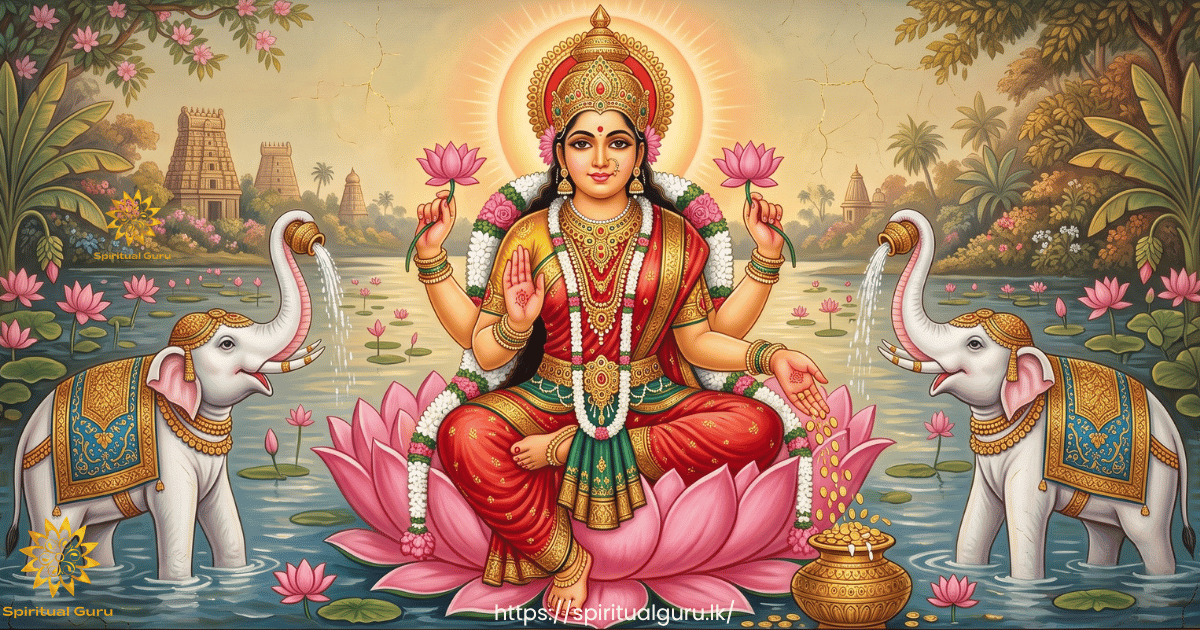
In the Sri Suktam, one of the oldest Vedic hymns dedicated to her, Lakshmi is described as radiant, seated on a lotus, showering gold coins from her hands. The lotus is not incidental it grows in mud yet remains untouched by it. That is the symbolic heart of Lakshmi worship: abundance that rises above struggle without being stained by it.
The Eight Forms of Lakshmi (Ashta Lakshmi)
Traditional worship recognizes eight forms of Lakshmi, each governing a different kind of prosperity:
- Adi Lakshmi — the primordial form, mother of the universe
- Dhana Lakshmi — wealth and financial abundance
- Dhanya Lakshmi — grain and nourishment
- Gaja Lakshmi — royal power and animal wealth
- Santana Lakshmi — progeny and continuity
- Veera Lakshmi — courage and strength
- Vijaya Lakshmi — victory and success
- Vidya Lakshmi — knowledge and wisdom
A Maha Lakshmi Sadhana, in its fullest sense, calls on all eight because true abundance is never one-dimensional.
Why Sadhana Matters More Than Just Worship
There’s an important distinction between casual worship and sadhana. Puja is an act; sadhana is a practice sustained over time. Lighting a lamp once on Diwali is puja. Committing to a mantra, a ritual, and an intention for 21 or 41 consecutive days is sadhana. The difference matters because consistency is what transforms a symbolic gesture into a genuine inner shift.
Before You Begin: Preparing for Your Lakshmi Sadhana
Choosing the Right Time
Timing isn’t superstition here it’s about aligning your practice with cycles that Hindu tradition has long associated with heightened receptivity. The most auspicious windows for beginning a Lakshmi sadhana are:
- Fridays — Lakshmi’s dedicated day of the week
- Purnima (full moon) — a time of culmination and fullness
- Diwali and the days surrounding it — considered the single most powerful period for Lakshmi sadhana
- Sharad Purnima — the autumn full moon, believed to be when Lakshmi wanders the earth blessing homes that are lit and awake
If you’re beginning a longer 21-day or 41-day sadhana, starting on a Friday during the waxing moon (Shukla Paksha) is considered ideal, since the moon’s growing light mirrors the growth you’re inviting.
Setting Up Your Sacred Space
You don’t need an elaborate temple room. A clean corner of your home, facing east or north, is enough. What matters more is intention and consistency the same spot, the same time, day after day, builds a kind of energetic groove that makes the practice easier to sustain.
Essential Items You’ll Need
- An image or murti of Maha Lakshmi (seated on a lotus, ideally)
- A clean red or yellow cloth for the altar
- A brass or clay diya with ghee or sesame oil
- Fresh flowers — lotus if available, otherwise marigold or red hibiscus
- Kumkum, turmeric, and akshata (unbroken rice)
- Incense — sandalwood or jasmine work beautifully
- A mala of 108 beads (Lotus seed or Rudraksha malas are traditionally favoured for Lakshmi mantra japa)
- Prasad — fruits, jaggery, or a sweet like kheer
- A small bowl of uncooked rice or coins, if performing wealth-focused rituals
A quiet detail that’s often overlooked: cleanliness matters more in Lakshmi worship than in almost any other Hindu practice. It’s said Lakshmi does not enter a cluttered, unclean space and whether taken literally or symbolically, there’s real wisdom here. Order invites abundance; chaos repels it.
The Step-by-Step Maha Lakshmi Sadhana Process
Here is the complete ritual sequence, drawn from traditional Shodashopchara (sixteen-step) puja practice, simplified for home use.
- Purification — Snana and Sankalpa Begin with a bath and wear clean clothes, ideally in red, yellow, or gold colours associated with prosperity and the goddess herself. Sit facing east, take a few drops of water in your right palm, and state your sankalpa: a clear, spoken intention for why you are performing this sadhana. Be specific. “I seek clarity and stability in my finances” works far better than a vague wish for “more money.”
- Invocation — Avahan Light your diya and incense. Ring a small bell if you have one the sound is traditionally believed to clear stagnant energy and announce the goddess’s presence. Invite Lakshmi into the image or idol with folded hands, mentally or aloud welcoming her into your space.
- Offerings — Shodashopchara Puja Offer, in sequence: water for washing her feet, flowers, kumkum and turmeric, akshata, incense, the lit lamp, and finally the prasad. Each offering is a small act of hospitality you are treating the goddess as an honoured guest in your home, which is exactly the spirit behind Lakshmi puja.
- Mantra Japa This is the heart of the sadhana. Using your mala, chant your chosen Lakshmi mantra a full round of 108 times, or more for deeper practice. Keep your breath steady, your eyes softly closed, and let the repetition settle your mind rather than rushing through it.
- Aarti and Closing Close with an aarti circling the lit lamp in front of the image while singing or reciting a devotional hymn. End by distributing the prasad and expressing gratitude, regardless of whether you feel you’ve “gotten” anything yet. Gratitude, practiced before results appear, is one of the more quietly powerful parts of any abundance practice.
The Power of the Lakshmi Mantra
Of all the mantras associated with Lakshmi, one stands above the rest in both popularity and simplicity:
Om Shreem Mahalakshmiyei Namah “I bow to the great goddess Lakshmi, the embodiment of abundance and grace.”
The seed syllable “Shreem” is considered Lakshmi’s own bija mantra a sound vibration said to directly carry her energy of prosperity and beauty. Even practitioners who don’t follow a full ritual often chant this mantra alone, especially in the early morning hours known as Brahma Muhurta, when the mind is naturally quieter and more receptive.
How Many Malas? Understanding Japa Counts
For a serious sadhana, tradition generally recommends:
- Beginners: 1 mala (108 repetitions) daily for 21 days
- Committed practitioners: 3–11 malas daily for 41 days
- Intensive sadhana: Up to 1.25 lakh (125,000) repetitions over a fixed period, often undertaken around Diwali
Quality matters more than quantity, though. A single focused mala is worth far more than five distracted ones.
Common Mistakes to Avoid in Lakshmi Sadhana
Having guided others through this practice, I’ve noticed the same handful of mistakes come up again and again:
- Treating it as a transaction. Approaching sadhana purely as “input mantra, output money” tends to backfire, largely because it keeps the mind anxious and grasping rather than calm and receptive.
- Inconsistency. Skipping days breaks the momentum that makes longer sadhanas effective. It’s far better to commit to a shorter, realistic duration than abandon a longer one halfway.
- Ignoring the inner state. Ritual without sincerity is just performance. The external steps matter, but they’re a container for an internal shift not a substitute for it.
- Neglecting gratitude and generosity. Many practitioners forget that Lakshmi worship traditionally goes hand in hand with charity. Giving to others food, money, or kindness is considered essential to keeping abundance flowing rather than hoarded.
Does Ritual Actually Do Anything? A Fair Look at the Other Side
It’s worth addressing the skeptical view honestly, because it deserves a real answer rather than dismissal. From outside the tradition, a sadhana can look like a purely psychological exercise and there’s genuine research suggesting that structured rituals do measurably reduce anxiety and improve focus, regardless of the specific beliefs behind them. Researchers studying ritual behaviour have repeatedly found that repetitive, intentional actions calm the nervous system and create a felt sense of control during uncertain periods, such as job loss or financial stress.
Seen through that lens, a Lakshmi sadhana works, at minimum, as a powerful discipline: it builds consistency, sharpens intention, and shifts a person’s daily focus toward opportunity rather than scarcity a mindset shift that has obvious downstream effects on decision-making and financial behaviour.
Whether you believe the effects stop there, or extend into something more transcendent that Sanskrit tradition has pointed toward for thousands of years, is a matter of personal faith. Both explanations, interestingly, lead to the same practical advice: show up, do the ritual sincerely, and stay consistent.
“Sadhana doesn’t remove the work. It changes the state you do the work from.” a reflection commonly shared among long-term practitioners
Sustaining the Practice: Beyond a Single Ritual
The truth about Lakshmi sadhana the part rarely advertised is that it’s not a one-time event with guaranteed results on day 21 or 41. It’s the beginning of a relationship. Many practitioners continue a lighter daily version indefinitely: a lit lamp on Friday evenings, a short mantra recitation each morning, a clean and clutter-free altar maintained year-round.
If you’re using tools to support the practice a Lotus Seed mala for japa, a Sri Yantra for meditation, or a small Lakshmi murti for your altar choose items that feel genuinely sacred to you rather than merely decorative. The energy you bring to an object matters as much as the object itself.
A gentle reminder as you begin: sadhana is not about forcing abundance to appear on your timeline. It’s about becoming the kind of vessel that abundance, when it arrives, can actually flow through without spilling out. That takes patience and patience, fittingly, is its own form of prosperity.
Looking for authentic tools to support your Lakshmi Sadhana Lotus Seed malas, Sri Yantras, or a Lakshmi murti for your altar? Explore Sacred Essentials at SpiritualGuru.lk
Leave a comment