
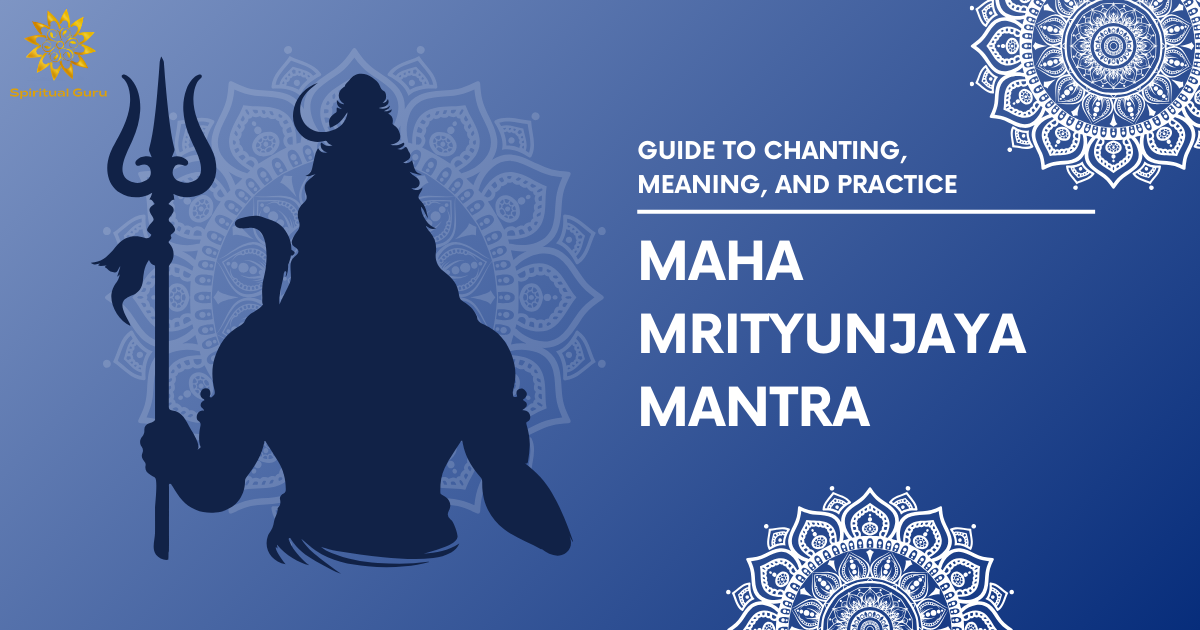
Maha Mrityunjaya Mantra The Great Death Conquering Mantra
Maha Mrityunjaya Mantra is one of the most powerful and sacred mantras dedicated to Lord Shiva. Known as the Death-Conquering Mantra, this ancient Vedic chant appears in the Rig Veda and is revered for healing, protection, and spiritual liberation.
The mantra is:
Om Tryambakam Yajamahe
Sugandhim Pushti-Vardhanam
Urvarukamiva Bandhanan
Mrityor Mukshiya Maamritat
This mantra is often called the Rudra Mantra, Trayambakam Mantra, or Moksha Mantra, and is deeply connected to Lord Shiva in his form as the Three-Eyed One.
Whether you’re new to mantra meditation or a seasoned practitioner, incorporating this mantra into your routine can bring profound peace and protection. In this blog post, we’ll explore its meaning, how to chant it effectively, when to practice it, and a detailed step-by-step guide to get you started.
The Meaning of the Maha Mrityunjaya Mantra
Breaking down the mantra word by word reveals its deep spiritual essence. Here’s a detailed translation and interpretation:
- Om: The primordial sound, representing the universe and the divine essence. It’s the seed syllable that connects the chanter to cosmic energy.
- Tryambakam: Refers to the “three-eyed one,” symbolizing Lord Shiva, who has a third eye representing wisdom, insight, and destruction of ignorance.
- Yajamahe: “We worship” or “we meditate upon.” This expresses devotion and surrender to the divine.
- Sugandhim: “Fragrant” or “sweet-smelling.” It metaphorically describes Shiva as the one who permeates life with divine fragrance, nurturing the soul.
- Pushti-Vardhanam: “Nourisher of all beings” or “one who increases vitality.” This highlights Shiva’s role in sustaining and enhancing life force.
- Urvarukamiva: “Like a cucumber” or “like a ripe fruit.” It draws an analogy to a fruit detaching effortlessly from its vine.
- Bandhanan: “From bondage” or “from attachment.” This signifies liberation from the cycle of birth and death.
- Mrityor: “From death.”
- Mukshiya: “Liberate us” or “free us.”
- Maamritat: “Not from immortality” – meaning, free us from death but grant us eternal life or moksha (spiritual liberation).
In essence, the mantra translates to: “We worship the three-eyed Lord Shiva, who is fragrant and nourishes all beings. May He liberate us from death for the sake of immortality, just as a cucumber is severed from its bondage to the vine.”
This mantra is not just a plea for physical longevity but a call for ultimate freedom from the fear of death, promoting holistic well-being body, mind, and spirit.
When to Chant the Maha Mrityunjaya Mantra
Timing plays a crucial role in mantra practice, as it aligns your energy with cosmic rhythms. Here are ideal times and occasions to chant:
- Daily Practice: Early morning (Brahma Muhurta, around 4-6 AM) or evening twilight (Sandhya time) for general well-being and protection.
- During Health Challenges: Chant when facing illness, surgery, or recovery to invoke healing energies. It’s especially potent for overcoming chronic ailments or boosting immunity.
- On Auspicious Days: Mondays (dedicated to Shiva), during Shivratri festivals, or full moon nights (Purnima) to amplify its effects.
- Life Milestones: Before starting new ventures, during times of stress, or for protection during travel. It’s also chanted for the departed souls in rituals like Shradh.
- Emergency Situations: In moments of fear, anxiety, or danger, a quick mental recitation can provide immediate calm.
- Seasonal Alignment: During solar or lunar eclipses, as these are considered powerful times for spiritual practices.
Avoid chanting during inauspicious periods like immediately after meals or when mentally agitated. Consistency is key even 11 repetitions daily can build cumulative benefits over time.
How to Chant the Maha Mrityunjaya Mantra
Chanting isn’t just about recitation; it’s a meditative practice that involves body, breath, and intention. Follow these guidelines for an authentic experience:
- Pronunciation Tips: The mantra should be chanted slowly and clearly. Break it into syllables: Om Tri-yam-ba-kam Ya-ja-ma-he | Su-gan-dhim Push-ti Var-dha-nam | Ur-va-ru-ka-mi-va Ban-dha-nan | Mri-tyor Muk-shi-ya Ma-am-ri-tat. Listen to authentic audio recordings.
- Posture and Setting: Sit in a comfortable cross-legged position (like Padmasana or Sukhasana) facing east or north. Use a quiet, clean space with a Shiva idol or yantra for focus. Dim lighting and incense (like sandalwood) can enhance the atmosphere.
- Breathing Technique: Inhale deeply before starting, chant on the exhale, and maintain a steady rhythm. Pair it with pranayama for deeper effects.
- Tools for Chanting: Use a rudraksha mala (108 beads) to count repetitions – one bead per mantra. This keeps the mind focused and infuses the practice with Shiva’s energy.
- Number of Repetitions: Beginners start with 11 or 21 times. Advanced practitioners aim for 108 (one mala) or multiples like 1,008 for intensive sadhana.
- Mental Focus: Visualize Lord Shiva while chanting, imagining a protective aura around you. End with a moment of silence to absorb the vibrations.
Remember, sincerity and faith are more important than perfection. If you’re new, start with guided sessions to build confidence.
Detailed Step-by-Step Guide to Chanting the Maha Mrityunjaya Mantra
Here’s a comprehensive guide to integrate this mantra into your life:
- Preparation (5-10 minutes): Choose a serene spot and time. Cleanse yourself with a bath or hand wash. Light a diya (lamp) and incense. Sit comfortably, close your eyes, and take 5 deep breaths to center your mind.
- Invocation: Begin with a short prayer to Lord Ganesha (remover of obstacles) or your guru. Then, mentally set an intention – e.g., “I chant for health and protection.”
- Warm-Up Chants: Recite “Om Namah Shivaya” 3-5 times to attune to Shiva’s energy.
- Main Chanting Session: Hold your mala in your right hand. Start with the first bead after the guru bead. Chant the full mantra once per bead, moving to the next with your thumb. Avoid crossing the guru bead – reverse direction if needed for multiple rounds. Aim for 108 repetitions, which takes about 15-20 minutes at a moderate pace.
- Visualization and Affirmation: As you chant, picture yourself as the “cucumber” being gently freed from life’s bindings, surrounded by healing light.
- Closing: After completing, rub your palms together, place them over your eyes, and slowly open them. Offer gratitude to Shiva. Drink water infused with tulsi leaves for added benefits.
- Post-Practice: Journal any insights or feelings. For best results, practice daily for 40 days (a mandala) to notice shifts in energy and well-being.
Benefits and Final Thoughts
Regular chanting of the Maha Mrityunjaya Mantra is said to reduce stress, enhance vitality, and foster a sense of immortality beyond the physical body. Scientific studies on mantra meditation suggest it lowers cortisol levels and improves focus, aligning with ancient claims.
If you’re drawn to this mantra, start small and let it unfold its magic. Share your experiences in the comments below have you felt its protective power? For more spiritual insights checkout our previous blogs if you need expert guidance please contact us via Whatsapp.
Leave a comment